From Hippie to King Goat — every tier in the Alien Goats Invasion merge tree, the point values, and what it actually takes to climb from a basic alien to the goat that runs the herd
UPDATE (June 17, 2026): The daily and weekly leaderboards are no longer capped at 25 spots. Every Alien Goat NFT now earns a leaderboard entry (score 1,000+ to rank), and the fixed $AGI pool is split across all ranked entries — #1 still takes the biggest cut, and every ranked Goat earns a share. Any "top 25" references below reflect the original system.
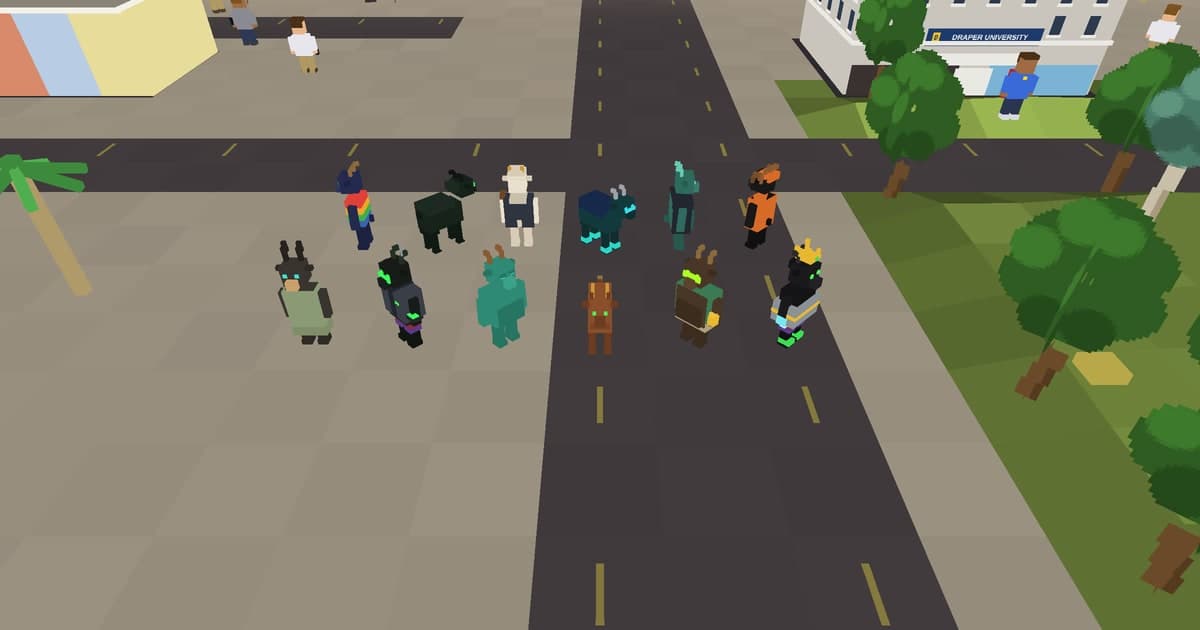
Twelve goat types. One merge tree. You start as an Alien Goat and you end as a King Goat — if you last that long. Every merge earns points. Every tier changes the game. The top 25 players on the daily leaderboard split a fixed $AGI pool, and the difference between top-100 and top-25 is usually one clean King Goat merge. Play a round now to see where you land. When the loop earns it, mint an OG Goat to climb the tree faster.
The hierarchy below is the one the herd runs on. Twelve names. Twelve point values. Twelve reasons to drop one more goat when the pile is already tilting.
Most games give you one character and call it a day. AGI gives you twelve — not as cosmetics, not as skins, but as the literal structure of the game. Every goat you drop can merge with an identical goat to become the next goat in the chain. That chain is the merge tree, and the merge tree is the entire strategic layer of the game.
The drop-and-merge loop works because the next tier is always visible. You know you need one more Hippie to see your first Hacker. You know the Flex is two merges away. You know King Goat is sitting at the end of the tree and you have never merged one, but the game says you can, so the game has your attention until you do. That is the retention design. No quest log, no battle pass, no daily missions — just twelve goats, one container, and the physics of the pile.
The tree is not random. It climbs from the casual (Alien Goat, Hippie, Hacker) to the degen (Ruggamaster, Bagholder) to the absolute (King Goat). Every name is a vibe. Every tier is a statement. The goat you are currently chasing says something about where you are in the game, and the goats above you say exactly what you have not done yet.
The starter. Two Alien Goats touch and you get your first Hippie and 1 point. Alien Goat merges are the bread and butter of early-game scoring — you will make dozens of them before your first Hacker appears. They are also the goat you will lose to the most, because the pile fills from the bottom and Alien Goats are what you drop when the drop timer says go.
Two Alien Goats become one Hippie. The name is a joke but the points are real — Hippie merges earn 2 points each, double the base tier. Hippie is the first goat that makes you feel like you are building something instead of just clearing space. Two Hippies become one Hacker.
The first goat that looks like it knows what it is doing. Hacker merges earn 4 points. By the time you are merging Hackers, the pile has real weight and the drop decisions start to matter — a Hacker dropped in the wrong slot can end your run. Two Hackers become one Judge.
Judge is where the mid-game starts. 7 points per merge. The pile is filling now and you are starting to sweat the drop timer. The pixel art gets more elaborate, the CRT glow gets brighter, the goat gets meaner. Two Judges become one Flex.
Flex is the goat that posts. 11 points per merge. By the time you see your first Flex, you have been playing for a few minutes and the pile is roughly half full. Flex is the inflection point — above Flex, the merges start paying serious points. Two Flexes become one Big Fat.
Big Fat is the tank. 16 points per merge, and the goat itself takes up noticeably more space in the container — which is a problem when the pile is already tight. High-risk, high-reward. Land the merge and clear space plus bank 16 points. Miss the alignment and the Big Fat lands on a Hippie, tilting the whole pile toward overflow. Two Big Fats become one Ruggamaster.
The goat that knows where the bodies are buried. 22 points per merge. Ruggamaster is the first late-game tier — you do not see one in every run, and when you do, it is a clear signal that this run is different. Two Ruggamasters become one Doctor.
Doctor merges earn 30 points. The name is a bit — Doctor Goat is the one keeping the herd alive, but the herd is a physics simulation and nobody actually heals. Doctor is the tier where a single merge starts to feel like a real leaderboard move. Two Doctors become one Cybercop.
Cybercop is the enforcer. 39 points per merge. The cyberpunk aesthetic on this one is deliberate — Cybercop is what the herd looks like when it has been through a few cycles and come out harder. Two Cybercops become one Bagholder.
The goat that never sold. 50 points per merge. Bagholder is a meme and a mechanic — the name is the joke, but the 50 points are not. A single Bagholder merge is worth more than the entire early game combined. Two Bagholders become one Fat.
Not "Big Fat" — just Fat. 64 points per merge. Fat is the second-to-last tier, and the name is designed to make you do a double-take when you finally see one on your screen. Most runs end before Fat appears. If you have merged a Fat, you are in the top few percent of any given day. Two Fats become one King Goat.
The top of the tree. 76 points per merge. King Goat is what every run is reaching for. The merge animation is more elaborate, the score pop is louder, the CRT scanlines seem to pulse a little brighter. A single King Goat merge is worth 76 times a basic Alien Goat merge, and it is the reason top runs cross 3,000 points in a single session. Two King Goats merge into nothing. You have beaten the game. Now beat your own score.
The goat hierarchy is also the level system. Twelve levels, twelve goats, and the top one is gated at 600,000 lifetime points.
Level
Goat
Lifetime points required
1
Alien Goat
0
2
Hippie
500
3
Hacker
1,500
4
Judge
3,000
5
Flex
6,000
6
Big Fat
12,000
7
Ruggamaster
24,000
8
Doctor
48,000
9
Cybercop
90,000
10
Bagholder
180,000
11
Fat
360,000
12
King Goat
600,000
Level is separate from a single-session run. A level-3 player with a sharp session can outscore a level-8 player who drops poorly. The merge tree hierarchy is equal-opportunity — points come from merges, not from the level badge. The level badge is the flex. The merges are the muscle.
The 600K number is the long game. Nobody hits King Goat on day one. The players grinding toward it have internalized the cooldown rhythm — one session every three hours, a streak bonus climbing from 100 to 500 points across seven consecutive days, and the occasional Instant Launch when a session ends too soon. The 600K grind is the habit. The daily leaderboard is the feedback.
The top 25 players on today's leaderboard split a fixed $AGI pool. The pool resets every 24 hours. Your score resets every session. The only thing that carries over is your level and your streak.
A player who has memorized the merge tree can drop an Alien Goat on the right side of the pile, merge it into a Hippie, and use that Hippie to trigger a chain that frees a trapped Ruggamaster. A player who has not learned the tree yet drops in the middle and loses 45 seconds later. King Goat merges are the difference between top-100 and top-25. One 76-point merge in a clean session is worth more than an entire mid-game worth of Hippie and Hacker merges. The hierarchy is not decorative. It is the scoring curve.
Mint an OG Goat NFT and you get a permanent slot in the holder list, the Instant Launch perk, and a permanent referral code that pays 50% of every mint your referees make — same Solana block, on-chain, visible on Solana Explorer.
Your referral link lives at /referrals. Send it to a friend. When they connect a wallet, both sides get 1,000 sign-up points. When they mint, 50% of their mint payment lands in your wallet. The referral loop is self-reinforcing — the more people you bring in, the more $AGI you earn, the faster your level climbs toward King Goat.
Seven days, seven streak bonuses: 100 → 150 → 200 → 250 → 300 → 400 → 500. Miss a day and you reset to 100. The streak is small in token terms but large in habit terms — it is the reason the same players show up on the leaderboard every single day. A 7-day streak plus one strong session is a top-25 finish waiting to happen.
Why goats. Why aliens. Why twelve of them descending on Earth in retro CRT pixel art.
The official line: the Alien Goats detected Earth's memecoin activity from deep space and identified a planet with untapped degen potential. Twelve archetypes were dispatched — one for every tier of chaos a memecoin market can generate. The Hippie is the early adopter who minted before the herd noticed. The Hacker found the merge tree and optimized it. The Bagholder never sold. The King Goat brought the most people in.
The real answer is simpler. Twelve goats make a better game than one goat, and a better game makes a better memecoin, and a better memecoin makes a better herd. The merge tree is the game. The game is the marketing. The marketing is the next player. And the next player is the next goat in the pile.
Open /game/suika and run a session. See what tier you hit on your first try — most people land somewhere between Judge and Flex. Then come back in three hours and try again. The merge tree does not change. Your aim does.
Mint an OG Goat at /mint when the loop has earned it. Grab your link from /referrals and send it to the one friend who will actually play. The hierarchy is waiting. The herd is growing. The invasion is twelve goats deep.